
Author: Celerion

  • The Next Frontier of Pharmacology: Micro Drug Delivery

    The Next Frontier of Pharmacology: Micro Drug Delivery

    Injectable medication can be burdensome for the patient, causing pain and discomfort, and can contribute to compliance issues especially when chronic treatment is required. A promising and emerging area in pharmacology that may alleviate these obstacles is transdermal microneedle drug delivery. Patch microneedles are about the size of a postage stamp and can contain ~30-50 tiny needles smaller than the diameter of a strand of hair. This innovative design limits pain, tissue trauma and infection, and could be applied by minimally-trained personnel, facilitating use in both developed and developing countries.

    Patch microneedles are widely gaining traction in the vaccine drug development space.  The microneedles penetrate the upper skin layer and rapidly dissolve to deliver the vaccine. Transdermal vaccine delivery is a preferred alternative for those with a fear of needles and is an essential step towards disease eradication worldwide.  A critical issue concerning current vaccines reaching rural regions is the lack of refrigeration and a cold supply chain. In this respect, microneedles hold the potential to overcome vaccine wastage due to heat and light exposure as well as volume waste.

    This technology is not only being applied to vaccines but across indications from oncology to chronic diseases such as diabetes. Alarmingly, the World Health Organization estimates that only half of all patients with chronic diseases comply with treatment recommendations.  Microneedle patches are being developed to address treatment compliance by easing the burden of daily or weekly injections.  Through passive drug diffusion, drug delivery could be sustained for 6 months up to 1 year as fixed needles swell within the skin layer to hold the patch in place.

    Microneedle patch technology is a promising drug delivery system that may ease patient burden and can facilitate great treatment compliance. A number of current studies in early clinical drug development are underway for a multitude of disease indications. This drug delivery technology has the potential to revolutionize access to treatment, making significant impact on public health worldwide.
  • Know Your Numbers Campaign

    Know Your Numbers Campaign

    Know Your Numbers Campaign

    At Celerion, our community outreach does not only serve to inform the public about who we are and medical research opportunities, but we also use this time to give back to our community. In April 2016, Celerion launched a “Know Your Numbers” campaign in the Phoenix, AZ area. Through this initiative, we provide free hemoglobin A1c health checks at local community events.

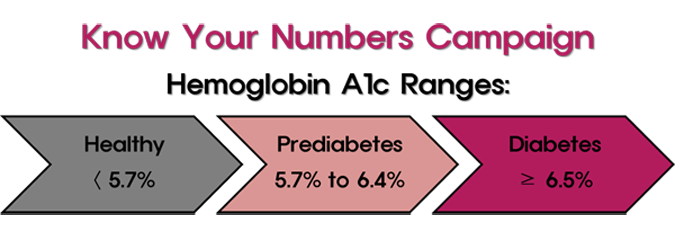
    Hemoglobin A1c reflects blood glucose levels over the past 2 to 3 months. This number helps an individual know if they are in a healthy range; falling in a prediabetes range, indicating risk of developing type 2 diabetes; or if they have diabetes, how well their medication is controlling their glucose levels. In the Phoenix area, the prevalence of type 2 diabetes is estimated at 10.8%, this is considerably higher than the national US average of 9.4%. In addition, the number for prediabetes rates is also startling.  According to the CDC, one-in-three people have prediabetes yet only 1 out of 10 know this, making diabetes prevention and awareness essential for our community.

    Since the start of this initiative, Celerion has provided 1389 free A1c health checks across 24 events with 14 local community partners.  Results from the health checks have been recently published in the journal Trials and shared with our community partners, to aid them in developing strategies to best assist those at risk of developing type 2 diabetes. For our efforts to promote prediabetes and diabetes awareness, Celerion have been recognized by the American Diabetes Association, Maricopa County Health Department, and The Arizona Partnership for Immunization.

    References:

    National Diabetes Statistics Report, 2017. Estimates of Diabetes and Its Burden in the United States. Atlanta, GA: Centers for Disease Control and Prevention; 2017. https://www.cdc.gov/diabetes/pdfs/data/statistics/national-diabetes-statistics-report.pdf.

    American Diabetes Association. Diagnosis and classification of diabetes mellitus. Diabetes Care. 2010;33 Suppl 1:S62–9. https://doi.org/10.2337/dc10-S062.

    Hyperlinks:

    https://www.celerion.com/

    https://www.celerion.com/wp-content/uploads/2017/07/Celerion_The-Impact-of-Prediabetes-on-Early-Clinical-Metabolic-Disease-Studies_F.pdf

    https://bit.ly/2uVU5VD


  • Biopharmaceutical Industry Recognizes Celerion as a Leading Contract Research Organization

    (Lincoln, NE April 3, 2018) – For the third consecutive year, biopharmaceutical industry executives have selected Celerion as an industry leader in multiple categories of Life Science Leader’s annual CRO Leadership Awards for 2018.

    Celerion was recognized as a CRO Leader in the  Capabilities, Compatibility, Expertise, Quality and Reliability categories across all three groups of respondents (big pharma, small pharma, and overall (combined big and small pharma).

    “We recognize that our clients are faced with increasing complexities and challenges in drug development as well as choices in development partners. We thank them for this recognition and for their continued trust in our dedication to providing them with high-quality work. It is through their support that we are able to advance our mission of helping them get their drugs to market faster, so that together, we touch the lives of our family, friends and people in need around the world,” said Susan Thornton, President and CEO.

    The survey queried the direct client experience across 27 different performance metrics spanning technical expertise to client service; results have been published in the May edition of Life Science Leader magazine.

    Now in its 6th year, Life Science Leader and Industry Standard Research (ISR) teamed up for the CRO Leadership Awards to provide readers with accurate and reliable customer feedback to assist them in choosing a reputable partner for their clinical research needs. Over 70 contract research organizations were assessed on 20+ performance metrics.

    Survey participants were recruited from Pharma and Biopharma companies of all sizes and were screened for decision-making influence related to working with contract research organizations. Respondents only evaluate companies with which they have worked on an outsourced project within the past 18 months. This level of qualification ensures that survey responses are based on actual involvement with CROs and clear experiential data. Complete results will be published in the May edition of Life Science Leader magazine.

    About Celerion 
    Celerion, a global leader in early clinical research services, offers a unique combination of medical expertise, clinical operations experience and scientific excellence that gives our clients the confidence to make fast, accurate decisions about their drug development path. Our services include comprehensive clinical development services from Phase 1-2b, including patient dose response studies, cardiovascular safety and product labeling studies. In addition, Celerion offers statistics, data management and biostatistics, and bioanalytical services. Our founding mission is to help our clients get their drugs to market quickly, so that they touch the lives of our family, friends and people in need around the world.

  • Industry Leading Nicotine Researcher Joins Celerion Research Team

    Industry Leading Nicotine Researcher Joins Celerion Research Team

    Dr. Ian Fearon further enhances Celerion’s renowned capabilities

    Lincoln, NE (January 23, 2018) – Celerion, the leader in Nicotine Clinical Research Services, is pleased to announce that Dr. Ian M. Fearon has joined Celerion’s industry leading Nicotine Research Team.

    Prior to joining Celerion, Dr. Fearon was Principal Scientist and Head of Clinical Research at British American Nicotine R&D where he was responsible for defining the strategy for developing and implementing clinical research programs in support of regulatory submissions and product launches.  During his long career at British American Nicotine, Dr. Fearon published extensively in prestigious, peer reviewed journals such as International Journal of Clinical Trials, BMC Public Health, American Journal of Health Behavior, Regulatory Toxicology & Pharmacology and many others.

    Celerion’s capabilities support all elements of nicotine research from regulatory consulting to clinical development, bioanalysis, data analysis and reporting. Dr. Fearon will be joining the elite Celerion scientific team which includes Dr. Donald Graff, Director Nicotine Research, and Kirk Newland, Technical Director Nicotine Science.  Over the past 17 years, the Celerion nicotine team has designed, consulted on, or analyzed data for more than 100 clinical studies, including large multi-site trials that have contributed to the development of potential reduced harm nicotine products. In addition to our two purpose-built facilities, strategically located in the US and EU, Celerion has cultivated a network of U.S. sites equipped to handle the unique requirements specific to larger nicotine product evaluations. Celerion’s world leading bioanalytical laboratory offers extensive expertise in the assessment of nicotine constituents, having analyzed over 500,000 samples in the past 3 years. Celerion has made significant investments in the area of nicotine harm reduction research, including a patented approach for testing e-cigarettes using stable isotope solvents.

    Celerion, a leader in clinical research services, is a global company with over 1,000 employees worldwide. Our unique combination of medical expertise, clinical operations experience and scientific excellence provides our customers with the confidence to make fast, accurate decisions about their product development path within the clinical research process.  Our founding mission is to help our clients get their products to market quickly, impacting public health needs around the world. For more information please visit www.celerion.com.

    CONTACT:
    Leslie C. Poli
    Senior Director
    M: +1 919 324 4397
    leslie.poli@celerion.com


  • Celerion Creates a Fully Automated, Early Development Clinical Trial Data Management Platform

    Celerion Creates a Fully Automated, Early Development Clinical Trial Data Management Platform

    Celerion Creates a Fully Automated, Early Development Clinical Trial Data Management Platform

    Lincoln, NE (January 17, 2018)Celerion, the leader in early clinical development, is pleased to announce a new core capability for this growing market: the integration of ClinQuick®, Celerion’s proprietary electronic data acquisition system, with TrialMaster®, OmniComm’s electronic data capture solution, to provide a fully automated clinical trial data management platform.

    The dynamic exchange of information between late pre-clinical efforts and early stage clinical trials is critical to accelerating the transition from first in human through to proof of concept patient studies.

    Celerion utilizes TrialMaster as the preferred electronic data capture (EDC) system for data capture on multi-site studies, and ClinQuick to capture bar-coded data for studies conducted in Celerion clinics. Integrating ClinQuick into TrialMaster automates Celerion’s data acquisition system and provides consistent data management and reporting capabilities in one centralized database. It facilitates consistency of data collection across clinical sites, ensuring accurate and high-quality information.

    This integrated solution provides a comprehensive data management platform to access ClinQuick’s bar-coded data, and enable dynamic risk monitoring, robust query management, ad hoc reporting and data extraction in portable industry formats. It has also been incorporated into Celexus, Celerion’s client portal for real-time access to all clinical study data.

    “Merging our proprietary electronic data acquisition system with an electronic data capture system is a revolutionary advancement that has not been seen before in early clinical research,“ said Michelle Combs PhD, Vice President of Data Management and Biometrics. “This automated solution minimizes the need for manual data entry and delivers a centralized data management platform that meets growing client expectations for speed and transparency.”

    “This innovative approach continues to signal to our clients and the market, Celerion’s strong commitment to technological progress and to understanding our clients’ challenges,“ said Susan Thornton PhD, President and CEO. “Integrating these solutions improves operational efficiency and makes it easier for our clients to make data-driven decisions to help move their clinical programs forward.”

    About Celerion

    Celerion, a leader in early clinical research services, is a global company with over 1,000 employees worldwide. Our unique combination of medical expertise, clinical operations experience and scientific excellence provides our customers with the confidence to make fast, accurate decisions about their drug development path within the clinical research process. Our founding mission is to help our clients get their drugs to market quickly, so that they touch the lives of our family, friends and people in need around the world. For more information please visit www.celerion.com.

    Media Contact:
    Michelle Maklas-Baker
    Manager, Global Marketing
    +1 732-306-7804
    media.inquiries@celerion.com 

  • Prediabetes, the New Normal in Early Clinical Research

    Prediabetes, the New Normal in Early Clinical Research

    Prediabetes, the New Normal in Early Clinical Research

    There is a growing shift in inclusion criteria from healthy normal subjects to patient groups in early drug development. For programs with a chronic metabolic disease investigational product, prediabetes subject enrollment in early phase studies can facilitate the detection of efficacy signals and proof-of-concept [1].

    Prediabetes describes a state of glucose impairment which holds a significant risk of developing type 2 diabetes. According to the CDC, 1 in 3 Americans have prediabetes, yet only 1 out of 10 individuals are aware of their condition [2]. Risk factors for prediabetes include being overweight or obese, an estimated 80% of subjects with glucose impairment are overweight or obese [3].  Additional risk factors include 45 years of age or older, a family history of type 2 diabetes, a sedentary lifestyle, and previously having gestational diabetes [2]. Clinical research organizations can provide a helping hand in managing the disease by being committed to raising prediabetes awareness through free A1c screening during community outreach events [4] and offering resources on diabetes prevention.

    Type 2 diabetes patients can be vulnerable to hyperglycemic and hypoglycemic events during early phase placebo-controlled studies, monotherapy studies or during washout periods. Since prediabetes subjects maintain a degree of glucose control, they are less likely to experience severe glucose excursions. Therefore, a risk mitigation strategy to minimize serious glycemic changes in early dose escalation studies could include the enrollment of prediabetes subjects. In addition, to better understand a drug’s effect on glycemic parameters, intensive daily glucose tracking through continuous glucose monitoring (CGM) can provide blood glucose readings every 5-15 minutes for up to 2 weeks. To this end, CGM is recognized as the “ECG Holter-monitor for glycemia” [5].

    Nonalcoholic fatty liver disease (NAFLD) is the next major health epidemic and prediabetes is strongly associated with hepatic inflammation and fibrosis in NAFLD subjects [6]. Nonalcoholic steatohepatitis (NASH), a deleterious form of the disease can lead to liver cirrhosis, end-stage liver failure and even hepatocellular carcinoma. Using non-invasive techniques to assess steatosis, inflammation and oxidative stress, and fibrosis can expedite clinical research. These pharmacodynamic imaging and soluble biomarker analyses are essential early signals of drug efficacy to enable faster go/no-go decisions.

    Prediabetes subject enrollment in early clinical studies for weight management, Type 2 Diabetes or NASH indications offers an opportunity to examine pharmacodynamic endpoints in a population of interest while minimizing safety concerns typically observed with patient studies.

    References

    1. Paglialunga, S. The Impact of Prediabetes on Early Clinical Metabolic Disease Studies: Celerion, Technical Note. 2017.

    2. Centers for Disease Control and Prevention. National Diabetes Statistics Report: Estimates of Diabetes and Its Burden in the United States, 2014. Atlanta, GA. 2014.

    3. Tuso P. Prediabetes and lifestyle modification: time to prevent a preventable disease. Perm J. 2014;18(3):88-93.

    4. Jaycox SH, Esposito M, Paglialunga S. Effectiveness of Community-Based HbA1c Screening as a Clinical Study Recruitment Tool. American Society for Clinical Pharmacology and Therapeutics; 2017 April 17 Washington,DC.

    5. Vigersky R, Shrivastav M. Role of continuous glucose monitoring for type 2 in diabetes management and research. J Diabetes Complications. 2017;31(1):280-7.

    6. Yilmaz Y, Senates E, Yesil A, Ergelen R, Colak Y. Not only type 2 diabetes but also prediabetes is associated with portal inflammation and fibrosis in patients with non-alcoholic fatty liver disease. J Diabetes Complications. 2014;28(3):328-31.